


Every now and then there is a performance in a film that is so captivating and unusual that it transcends the movie and becomes its own cultural touchstone. In Possession (1981), Isabelle Adjani summons a primal rage as Anna, a monster-fucking soon-to-be divorcee prone to extreme behaviour. She shrieks, wails, stares unblinkingly into the camera and throws herself against the edges of the frame. It’s as if she is trapped by the apparatus of the image itself, as it represents the claustrophobia and mayhem of being stuck in a loveless marriage. It’s at once disarming and liberating to watch her test the limits of what might be deemed acceptable.
She was awarded Best Actor at the 34th Cannes Film Festival on May 25th, 1981, but the film slipped through the cracks in the decades to come, and was nearly forgotten. It was ultimately saved due to the work of female film critics, especially Canadian film scholar Kier-la Janisse, who wrote about it with great love and care for House of Psychotic Women, her omnibus of female neurosis in horror and exploitation films. With time, Adjani’s performance has grown to symbolize the very idea of the psychotic woman in the modern horror film, and the daughters that came from her mad womb have carried on her legacy; perhaps none more so than Mia Goth as Pearl, a morbid, axe-swinging diva with dreams of escaping her abusive family.
"It can be cathartic, even when it is cringe-inducing."
Women horror obsessives have begun to form a canon around these Adjani-influenced performances, dubbed the “good for her” horror film. Strands of Adjani’s technique can also be seen in Megan Fox’s demonic teenager in Jennifer’s Body (2009), Lupita Nyong’o’s feral doppelganger in Us (2019), and, most recently, in Inde Navarrette’s depiction of a woman possessed by a violent co-dependent version of love forced upon her through a wishing device used by her incel friend in Obsession (2026). These madwomen are often grouped together on social media in supercuts, or in carousels that showcase patterns of technique, such as exaggerated facial contortions of smiling too broadly, or appearing so pleasant that they are inhuman and scary. Inevitably, one will find Mia Goth’s Pearl among this sorority. She has become a Gen-Z mascot of sorts with her flowing red dress, her axe, and her painfully affixed smile. Pearl may have struck a chord because she is not afraid of exposing the worst parts of herself, and then using them as assets. Younger audiences who were socialized online know all too well the stresses of maintaining both appearance and persona, and so Goth might be especially appealing to young women, because she is enlivened by playing characters who do not internalize their feelings. Her characters transcend through confrontation, letting their emotions and desires spill out for everyone to see. It can be cathartic, even when it is cringe-inducing.
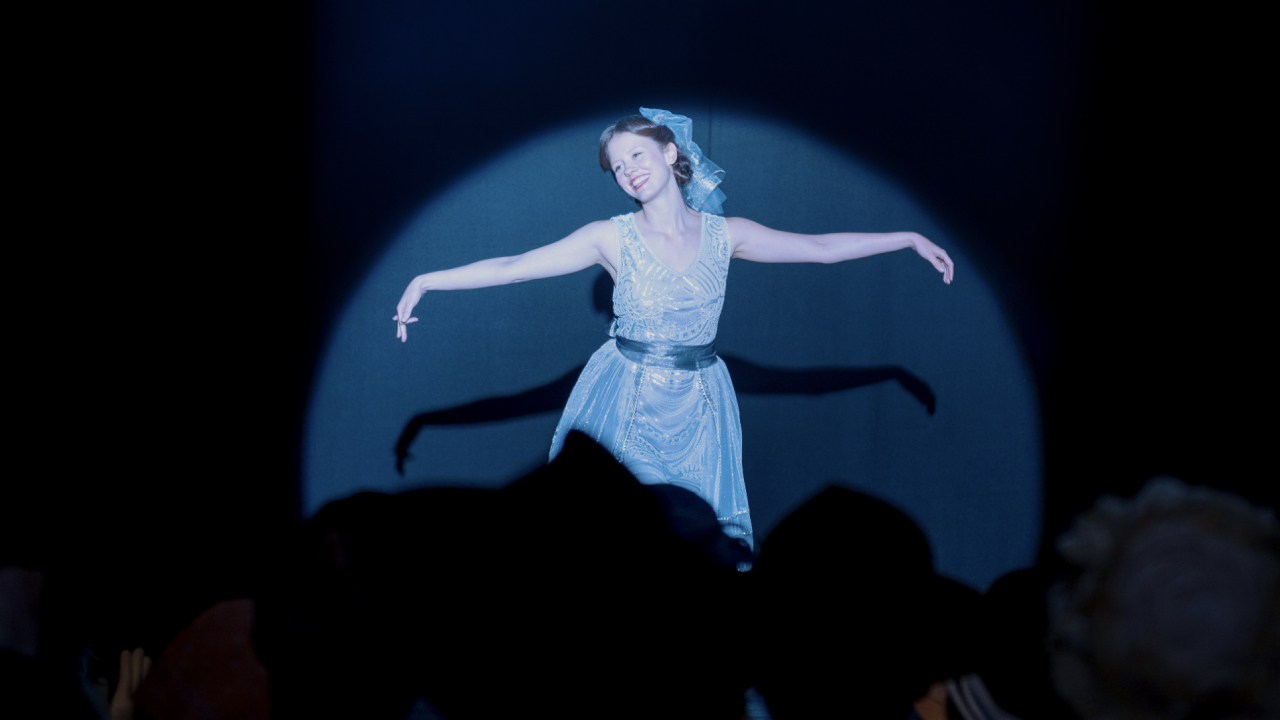
Pearl is set in 1918 in the midst of the Flu epidemic and the concluding days of World War I. She is initially presented as a girl next door, tending to the cattle and the stock on the family farm, but her daily chores and rituals are not the stuff of whimsical dreams: there is something wrong with her. On Goth’s furrowed brow and in her cold eyes, it’s clear that Pearl’s life is so quiet that it is driving her to bloodshed. She desperately wants to leave her corn-fed life, and run off to Hollywood to star in the pictures, or to Broadway to light up the stage as a dancer. But her mother is immovable in the belief that her daughter’s duty is to take care of this farm until she is old and weathered, with those fantasies now all but dust. When Pearl does not get what she wants, or when she feels confined, she reacts aggressively, taking matters into her own hands with shovels, pitchforks, or axes. The character is strange, not just because of her actions, but because Goth’s approach is at once modern and a throwback to an older Hollywood style of craft. Goth seems like she’s over-acting compared to the middle-of-the-road realistic style preferred now, but Pearl is closer in spirit to Hag characters of collapsing manner-and-refinement played by Bette Davis and Joan Crawford. In Pearl, the melodrama and tear-jerker emotionality of the “women’s film” comes back to haunt Hollywood, as if it has corroded inside of this character who feels as though she has been lied to by the pictures.
Goth’s technique stands out because she is willing to push herself further and make a fool of herself, letting spittle pile up in her lips, or weeping too heavily. In this way, Goth is wired exactly like Pearl: she will go to any lengths to show us that she is a star. Goth was born into a family of actors, but she initially had no interest in following their career path. She saw the toll it took on her grandmother to be stuck on a roller coaster of success and failure. In Interview Magazine, Goth posits: “You have to be fierce as an actor."
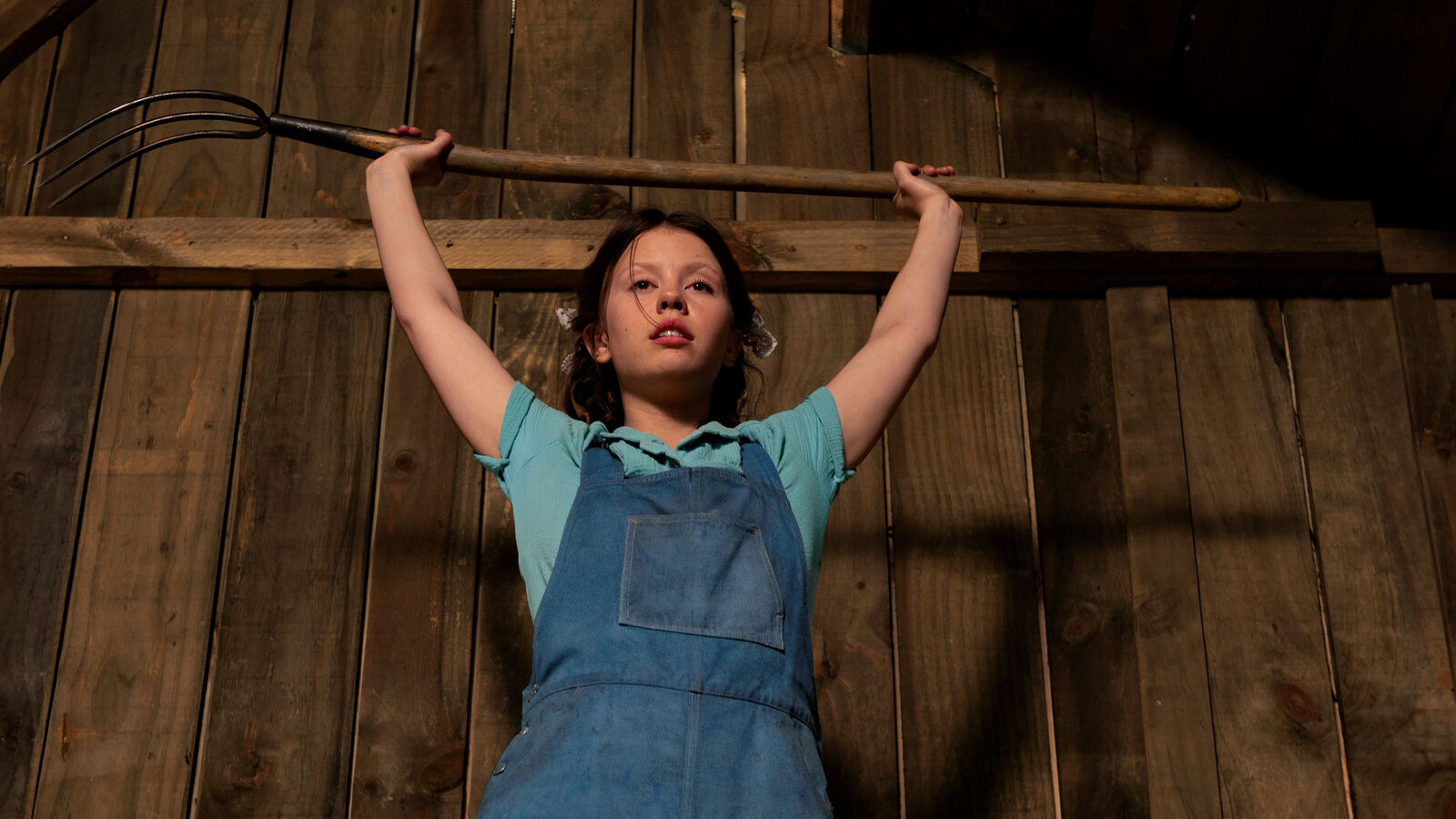
Goth made her screen debut in Lars von Trier’s Nymphomaniac (2013) in a role whose sexual explosivity foreshadowed the unbridled way she would use her body in roles to come. Goth relishes the opportunity to exploit her beauty into something perverse—be it Pearl’s scarecrow fucking, or forcing Alexander Skarsgård to crawl on his hands and knees before he sups at Goth’s lactating breasts in Infinity Pool (2023). Her process is built on trying things, exploring, and seeing what works. She is guided by her own method, which she describes as “built on instinct.” And her instincts frequently make me question the validity of overacting as a value judgment for actresses. Goth is working alongside a heritage of exaggerated depictions of avant-garde hysteria in horror, like those of Adjani, Davis and Crawford. Their performances dismantle socialized feminine behaviour models, and expectations of prim beauty standards. These types of performances are so frequent in horror that I begin to wonder if this is what repressed female rage actually looks like when it is unleashed. A woman can only be told to smile so many times until that smile becomes deranged.
"A woman can only be told to smile so many times until that smile becomes deranged."
And deranged, Pearl becomes. The centrepiece of Mia Goth’s acting career thus far is a six-minute monologue in Pearl (2022) when she confesses her character's darkest desires and wretched behaviour. Pearl is easy to root for because she’s both a victim and a monster—like Dorothy from The Wizard of Oz (1939) if she fed her family members to an alligator. After failing an audition to join a local dance troupe, a devastated Pearl admits to her blonde, beautiful sister-in-law Mitsy (Emma Jenkins- Purro) that she is a mad killer and cannot be fixed. Goth’s cadence and unplaceable accent are a little strange, but the rhythm of her delivery is hypnotic, and because the camera never cuts, we are forced to sit and watch Goth perform her monologue in an unbroken take. When she asks her sister-in-law to understand her actions, even murder, it is at once tragic and ridiculous, but it's what she needs. Mitsy cannot understand Pearl’s repressed life, because she gets everything she wants, including that spot in the dance troupe. The scene ends with Pearl chasing Mitsy with her axe, and eventually hacking her to bits. In a making-of featurette, Goth said she likes to think of her characters as psychologically logical, and she feels there are discernible reasons for Pearl's actions. Goth’s psychology of Pearl is logical, but she expresses it in a way that is equally obscene, tacky, and sincere.
Goth’s strange, overcranked style is intentionally messy and vulnerable. She is not like a triumphant scream queen or like an empathetic victim seeking retribution. She acts out her avant-garde madwomen through a luxuriant, decadent, sometimes perverse style, where she can indulge in any erratic behaviour that seems fit for the characters. These characters are more than monsters; they are abstractions of feminine rage that many horror fans gleefully cheer on.
Good for her.