


On the frosty morning of January 23, as immaculately dressed Jack Quaid and Zazie Beetz announced the Academy nominations at the Samuel Goldwyn Theatre, Film Twitter erupted as fans vented their frustration at the perennially disappointing choices. “Where is the love for Charles Melton for his gut-wrenching turn in May December?” “Willem Dafoe was done dirty again—he was amazing in Poor Things!” Yet amid these familiar cries for overlooked performances, a faction of cinephiles had a different bone to pick with the Academy that morning.
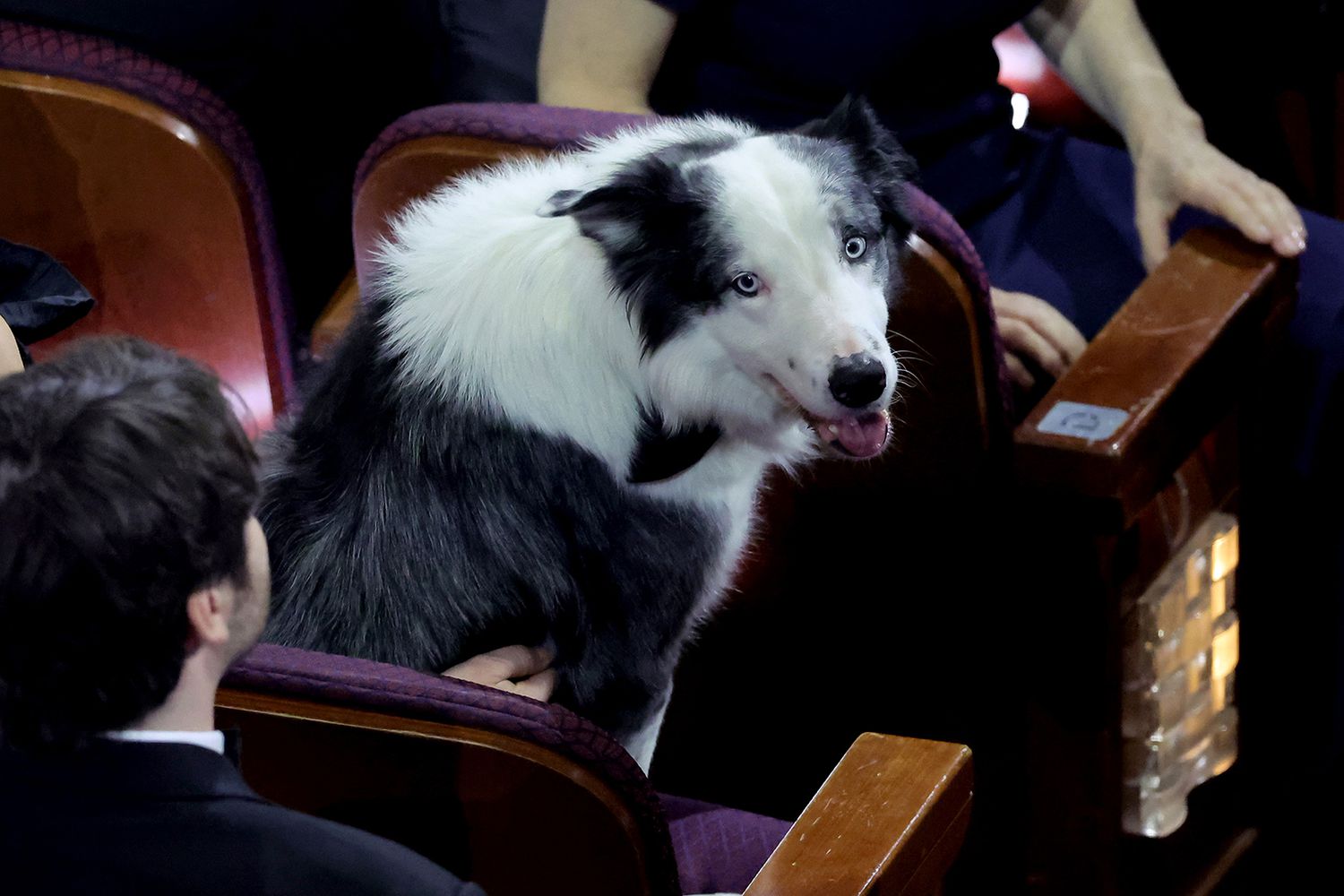
Although this snub was anticipated, connoisseurs of canine performances still took to social media to hail the unsung Border Collie, Messi, for his show-stealing turn in the French legal drama Anatomy of a Fall (2023). Even as Messi (yes, he was named after the football player) had bagged the coveted Palm Dog Award at the Cannes Film Festival, the uproar over his omission from the Oscars was not merely a fatuous trend, but an earnest critique of the Academy’s speciesist bias (some people even campaigned for a new awards category for animal thespians, the Paw-scar!) This uproar was because Messi’s performance did not adhere to the standard tropes of canine performances—to bark, fetch, or attack—but enacted something far more uncanny, more undoglike. He had simulated his own near-death experience.
If you still haven’t caught up with Justine Triet’s drama, let me briefly set the scene. In this murky portrayal of a marriage falling apart, writer Sandra Voyter is accused of pushing her husband Samuel to his death from their chalet. Cut to the chase: the couple’s only son, Daniel, who is beginning to question his mother’s innocence, is compelled to carry out a fatal trick with his guide dog, Snoop (Messi). To verify the veracity of his mother’s claims, Daniel feeds several aspirin tablets to Snoop to check if his guide dog passes out like he once did after ingesting Samuel’s aspirin-filled vomit. Daniel realizes that his mother was telling the truth about his suicidal father when Snoop falls into a catatonic state—resulting in the scene that had turned Messi into an overnight sensation.
"...can the intricacies of canine performances be merely reduced to “treats”?"
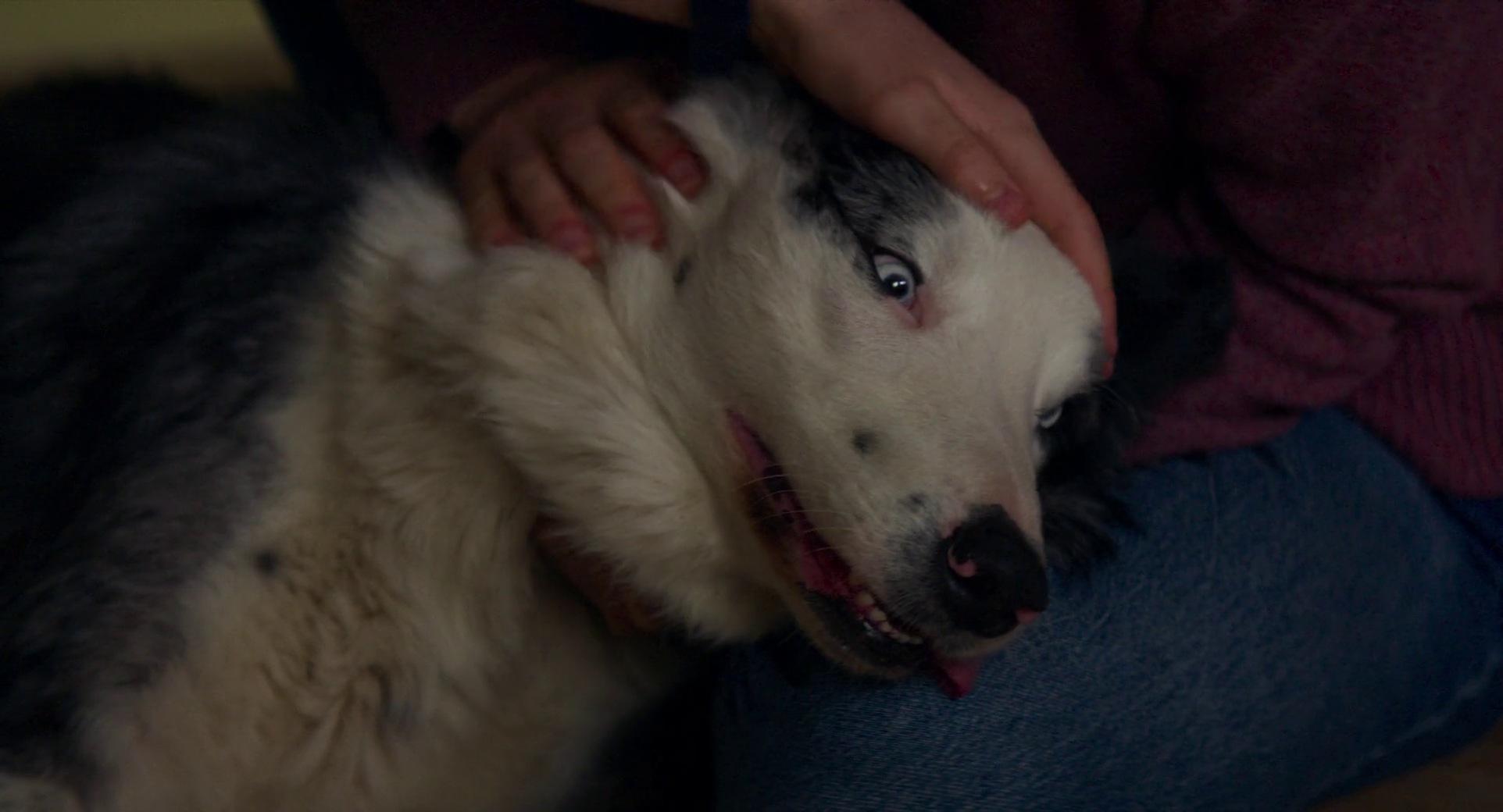
With his tongue sticking out, his light-blue eyes motionless and his furry body unflinching, Snoop lies on the floor as a hysterical Daniel tries to revive him. Despite Daniel’s frantic cries, the dog remains morbidly stationary, and it is only later, when he is fed saline water to induce vomiting, that Snoop springs back to life, although still enervated by the ordeal. Messi's astonishing commitment to naturalism, especially in this gruelling sequence, propelled him to instant stardom. Equal praise was also heaped upon Laura Martin Contini, Messi’s trainer and guardian who had adopted him as a pup. Contini re-enacted the famous “dying” trick in various interviews and detailed the arduous two-month training process required to perfect the technique. When asked about the secret to Messi’s acting chops, Contini earnestly replied that it was all about “treats!” No doubt the reward system embedded in training animals ultimately led to Messi’s spectacular turn, but can the intricacies of canine performances be merely reduced to “treats”?
Let’s start with treats, anyway. In his influential study of animal performances, Michael Peterson suggests that animal performances are constructs that are framed by what he calls the “animal apparatus.” Treats are part of this apparatus, but so are whips, collars, and other tools that compel animals to succumb to human expectations. What Peterson’s theory illustrates is that animals are not really actors like humans are—they never agreed to be stars, despite the media campaigns and other anthropomorphic traits projected onto them (Letterboxd literally has Messi bark out his four favourite films in a video for social media). While the viral camp-laden discourse around Messi might have framed him as the Meryl Streep of canine acting, such projections, however innocuous, run the risk of effacing Messi’s volition. Messi, after all, couldn’t care less about Oscar nominations or being featured in a new film (Doggie Wears Prada, anyone?) As Contini suggested throughout her press conferences, no matter how "natural" they are, animal performances are ultimately constructed by the trainer—who often remains off-screen or is disguised as a background actor on the set to guide the performance.
"Like all terrific thespians, Messi’s performance is deeply embodied, so much so that the real work behind it remains impossible to see."
While certainly convincing, the idea that treats or rewards govern such performances reduces animal performers to gluttonous creatures, mechanically complying with human commands for the promise of one extra bite. What is negated here is the labour performed by the animals during filming. Like any working performer, animals undertake a great deal of physical labour through training, rehearsal, and reshoots that never make it into the final cut. Such physical labour is also contingent on the demands of the role: Buddy, the Labrador from our childhood staple Air Bud (1997), had to learn various tricks, including jumping out of a window, and of course, “playing” basketball. Abbey and Kona, playing the German shepherd Sam from I Am Legend (2007), had to run alongside Will Smith on a treadmill. In Messi’s case, such physical labour is evident not just in enacting his famed trick but also in the long takes (and retakes) that center on him walking, playing and fetching. But far more importantly than learning these physical tricks, dogs also perform emotional labour that cannot be deduced from what you see on screen.
Sociologist Arlie Russell Hochschild first used the concept of emotional labour to describe the performative labour of people in retail jobs, who were expected to appear emotionally sound to please customers, regardless of how they felt. Similarly, scholar Kendra Coulter argues in her pioneering research that animals also perform a form of emotional labour when cohabiting with humanity. How often does your dog or cat patiently put up with you kissing them incessantly or pestering them with your playful antics? This emotional labour is exacerbated in animal performances on screen, where animals are expected to remain calm and obliging in a demanding environment with a crowded workplace, irregular shooting hours, and interference from the crew (“Oh, can I pet him, please?”). In Messi’s star-making sequence, the emotional labour performed by him is of a different nature altogether. Not only is he required to fake his death, but also to regulate his emotions as the actor playing Daniel weeps in front of him and hysterically asks him to get up. It is natural for any dog to react to a sobbing human, but this is where Messi must stay poised and not get up. The greatness of his performance lies precisely in eschewing his innate nature as an empathetic companion and performing the emotional labour required for him to stay dead. Like all terrific thespians, Messi’s performance is deeply embodied, so much so that the real work behind it remains impossible to see.
Considering his viral popularity, Messi was all set to steal the show on Hollywood’s biggest night. But during a trial run with Jimmy Kimmel, Messi could not help but bark throughout Kimmel’s monologue, interrupting the proceedings. Alas, the appearance was shortened, and his viral clapping was then pre-recorded for later broadcast! But the irony behind this omission attested to Messi’s inability to regulate in front of an audience–a recalcitrance to perform the emotional labour demanded of him. Rather than oblige the audience with the ‘good boy’ image stamped upon him, Messi’s barking placed him squarely among his A-list colleagues. After all, throwing a tantrum is practically a prerequisite for stardom.