


INNOCENCE and PANIC
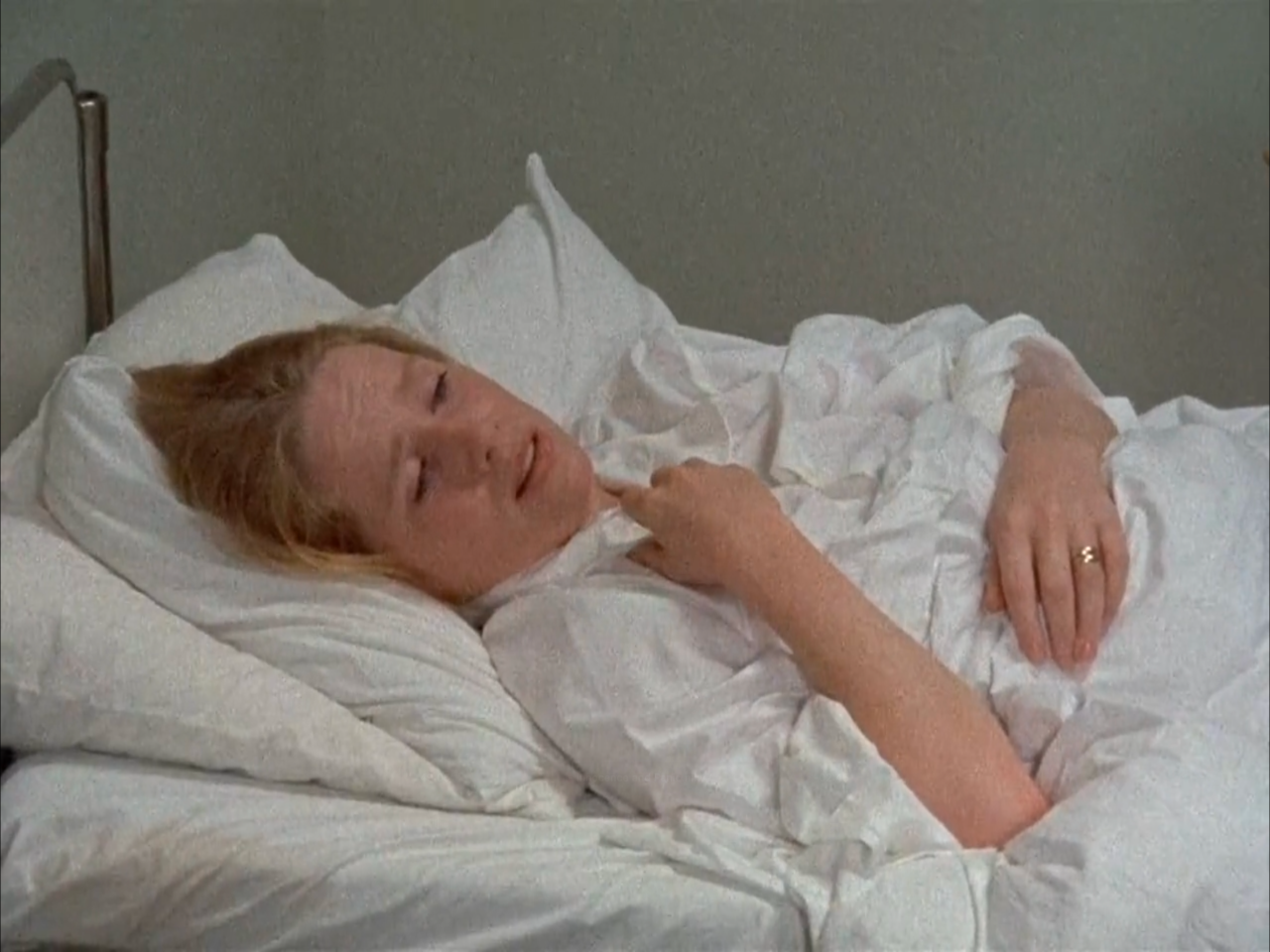
We meet the wife in white, in bed, in the aftermath of minor surgery. The husband is in black with his back to the camera and he comes to her bedside bareheaded as one comes to pay respects to the dying. The wife is not dying but her condition is, in a sense, terminal. With one hand she touches the furrow of her brow from which a pain radiates like a throbbing red cloth. Yet she is in white. This is when I fall in love with her, Liv Ullmann, as her character struggles against an unveilment of colour. Fear quivers the nerves of her skin. She reaches for the husband’s hands as if reaching midriver for a branch. A vague chivalry is aroused in me: O, would that I were such a branch! She tries to tell him that something irrevocable has been set in motion, a clot of time gone awol, but the husband does not want to hear, his watch keeps stopping, he must go. He goes. Marianne, alone, pulls the covers over her head. Clenching the white sheets and weeping: how the hands, in this case, become the face.
THE ART of SWEEPING THINGS UNDER the RUG
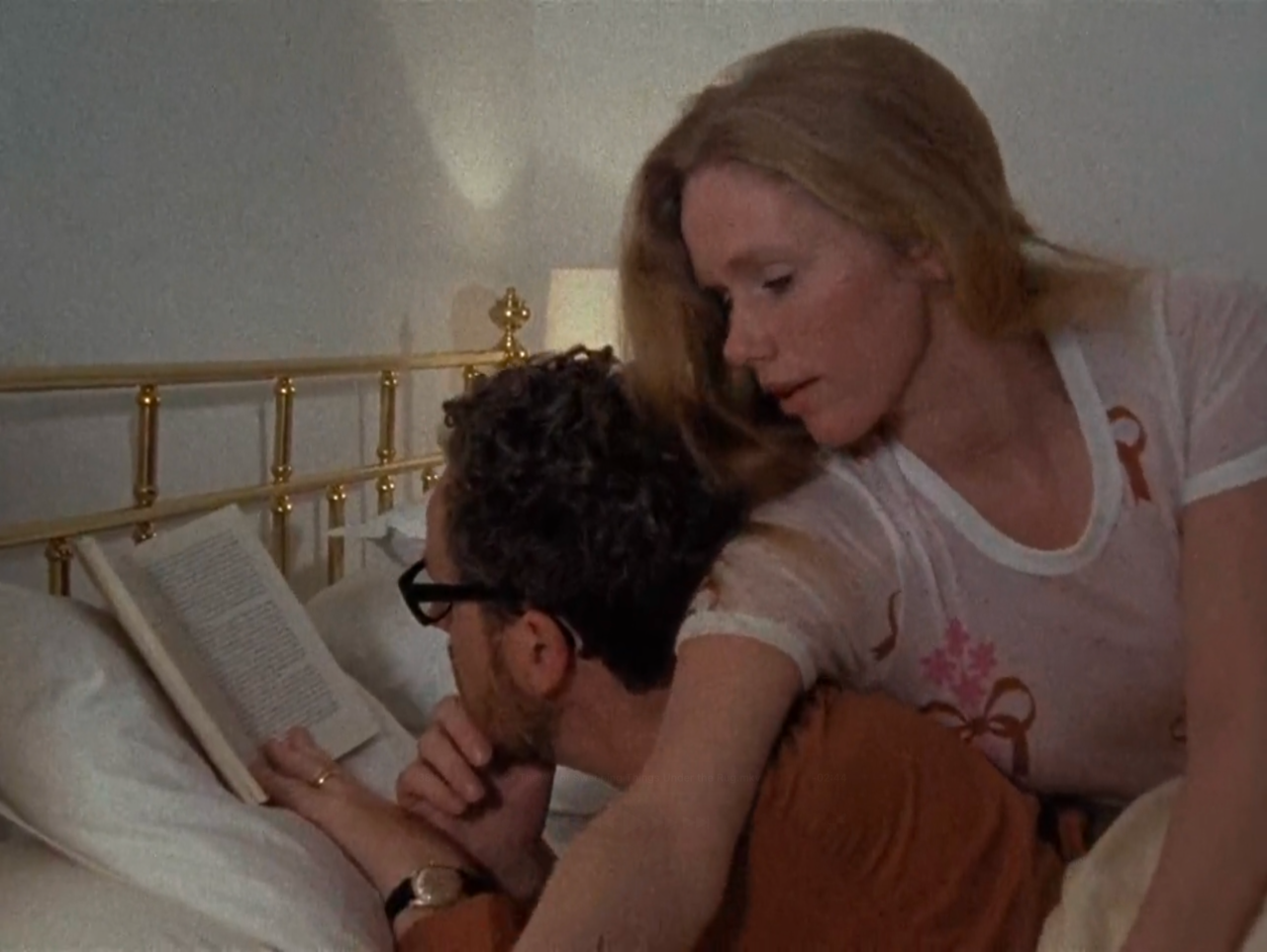
Remaining content requires a certain technique. I’m quoting the husband, but it’s the wife who is manic with it. Technique. To cancel plans, to go abroad, to stimulate a wider range of motion. The crisis is in her hands: gone numb. Her life so cold it burns. Every lamp, every incandescence covered in ash, deposits of grey sediments, grey minutes, each day a little more grey on the heap. They barely make love anymore. She offers her body to him like a mathematical problem: solve for C. He solves the problem by turning away. A critical distance has been regained. And though both faces face the camera, though both are in frame, it is the wife’s face we see. Beatitude. Could it be that the face is a kind of rug under which bad feelings, bad dreams or omens, may be swept? In almost every case, our manner of appearing is our manner of being. (I’m quoting Sontag.) The mask is the face. There, her art: the wife, her mask, luminous with ash.
PAULA
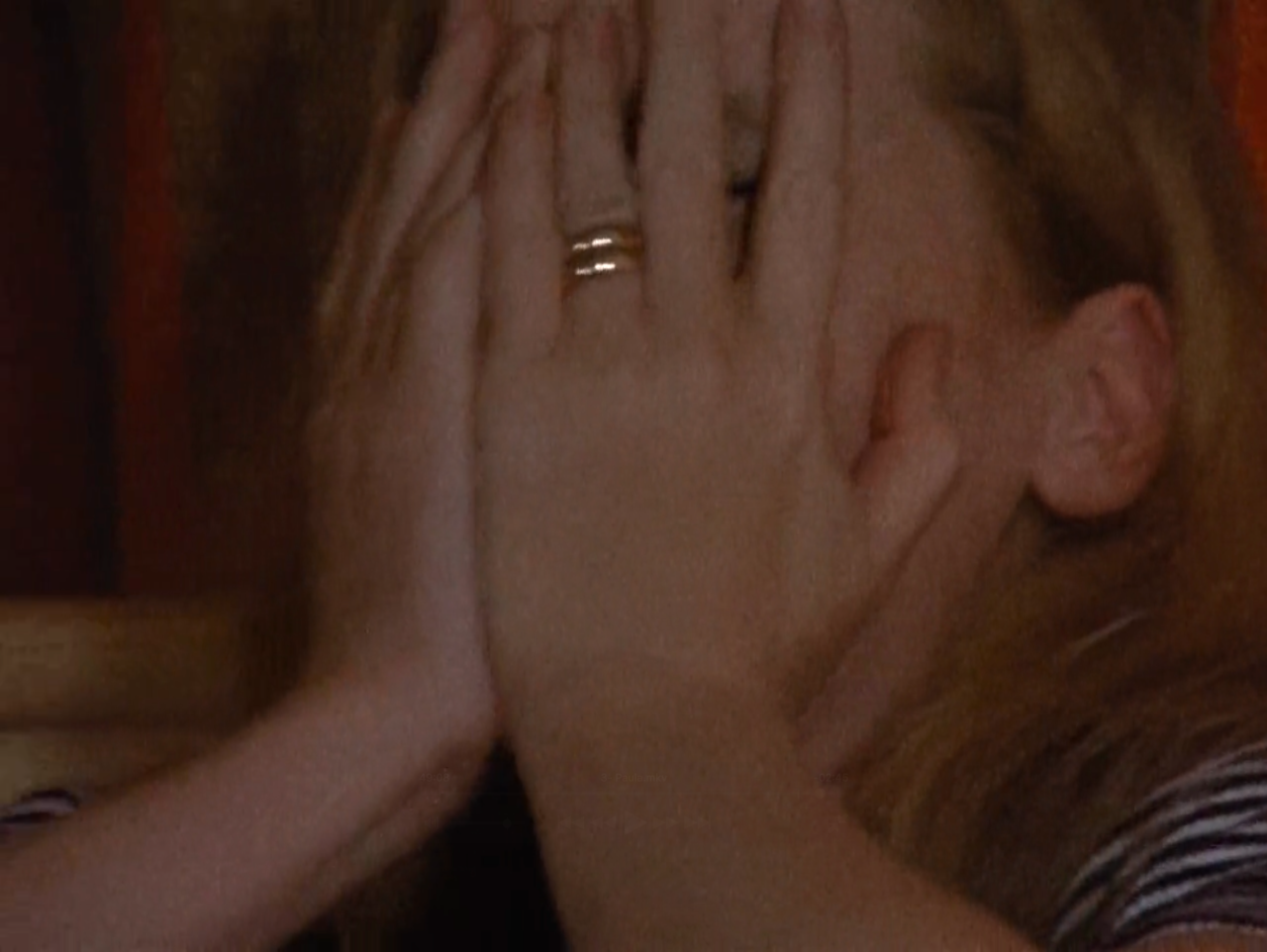
The wife learns about the other woman over a sandwich and a beer. How banal, the event of being left. She’s hardly eaten all day. Barthes tells us that historically, the discourse of amorous absence is carried on by the Woman. The wife carries on. She clears the plates, she helps the husband pack his bags. She hopes that by helping him prepare to leave her, he will not leave her. At last the husband gets ready to go. We see the wife take up her position at the door, at the threshold between what she can live with and what she cannot imagine she will survive. What she cannot imagine she will survive is the end of the story. Her clinging has a tinge of violence, thorns come off her hands, the husband pulls free from her as if from strangling vines. He goes. Now the discourse of absence truly begins. Marianne, alone, calls a friend and discovers her naïveté: everyone already knows. A torment moves through her with arterial force, her face a burst vessel hemorrhaging and hemorrhaging anguish. I know this anguish; for I, too, have been left.
THE VALE of TEARS
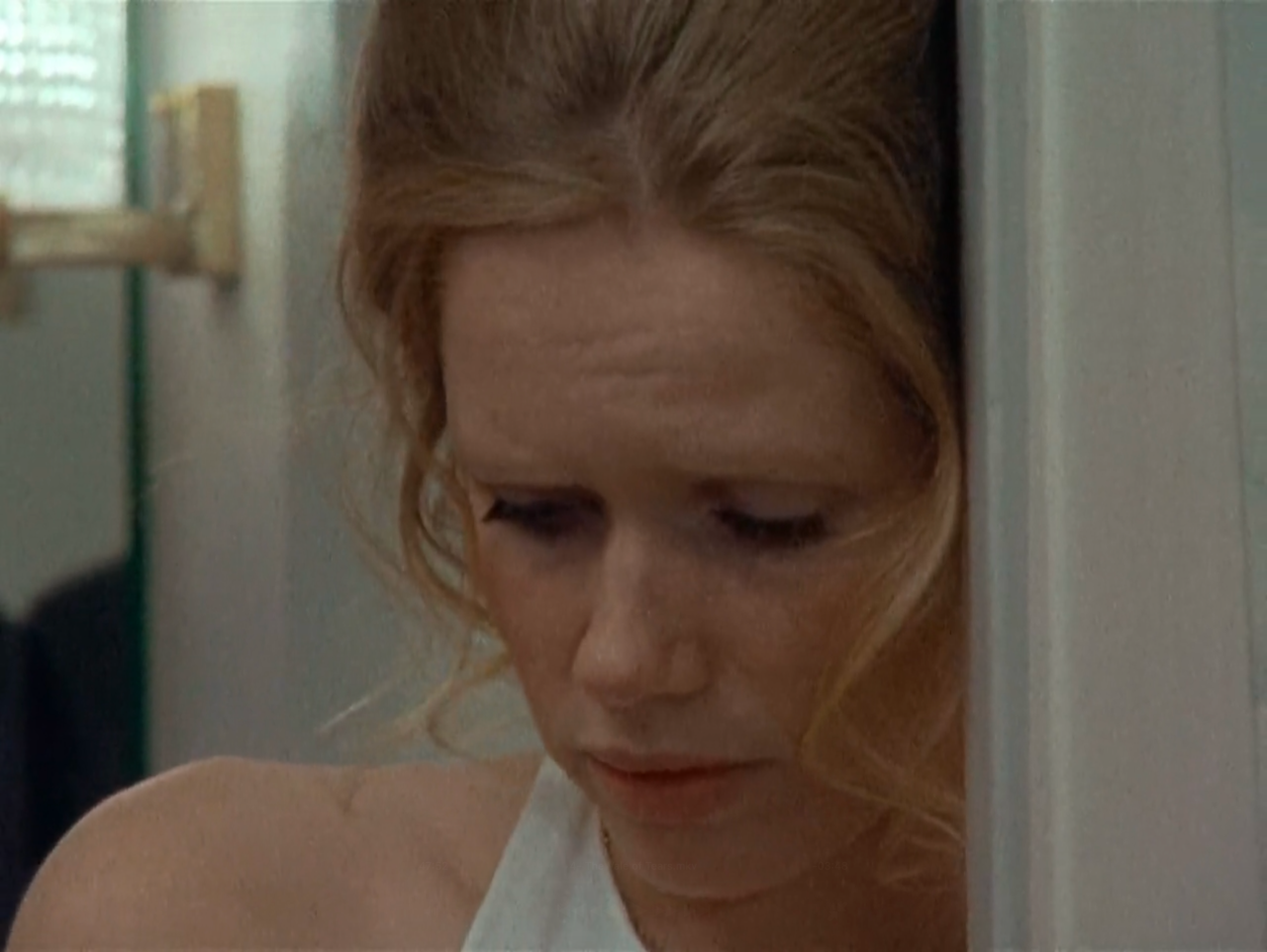
The face is a reliable indicator of pain. For example, the closing shot: how Marianne winces in coincidence with the sound of the door closing. The source of the pain is not in the face—the source is the recognition that the husband has left her, again—and yet the face gives pain its manifestation. The face is where pain speaks. All the brilliance of Liv Ullmann’s performance is contained in that wince: a woman reduced to reaction. Marianne’s hands are not in the frame. What does he want me to want? Did I write that? No—Liv did. She’s smiling in all the photographs. It’s no wonder that Bergman fell in love with her face on first sight. Like him, I cannot unhitch my breath from her beauty. The beautiful is that which we desire without wishing to eat it. Is it … ? Unlike me, Simone Weil was no hedonist. But I digress. Where did we leave off? An ending, again: Marianne in the vale, lovely and in pain.
THE ILLITERATES
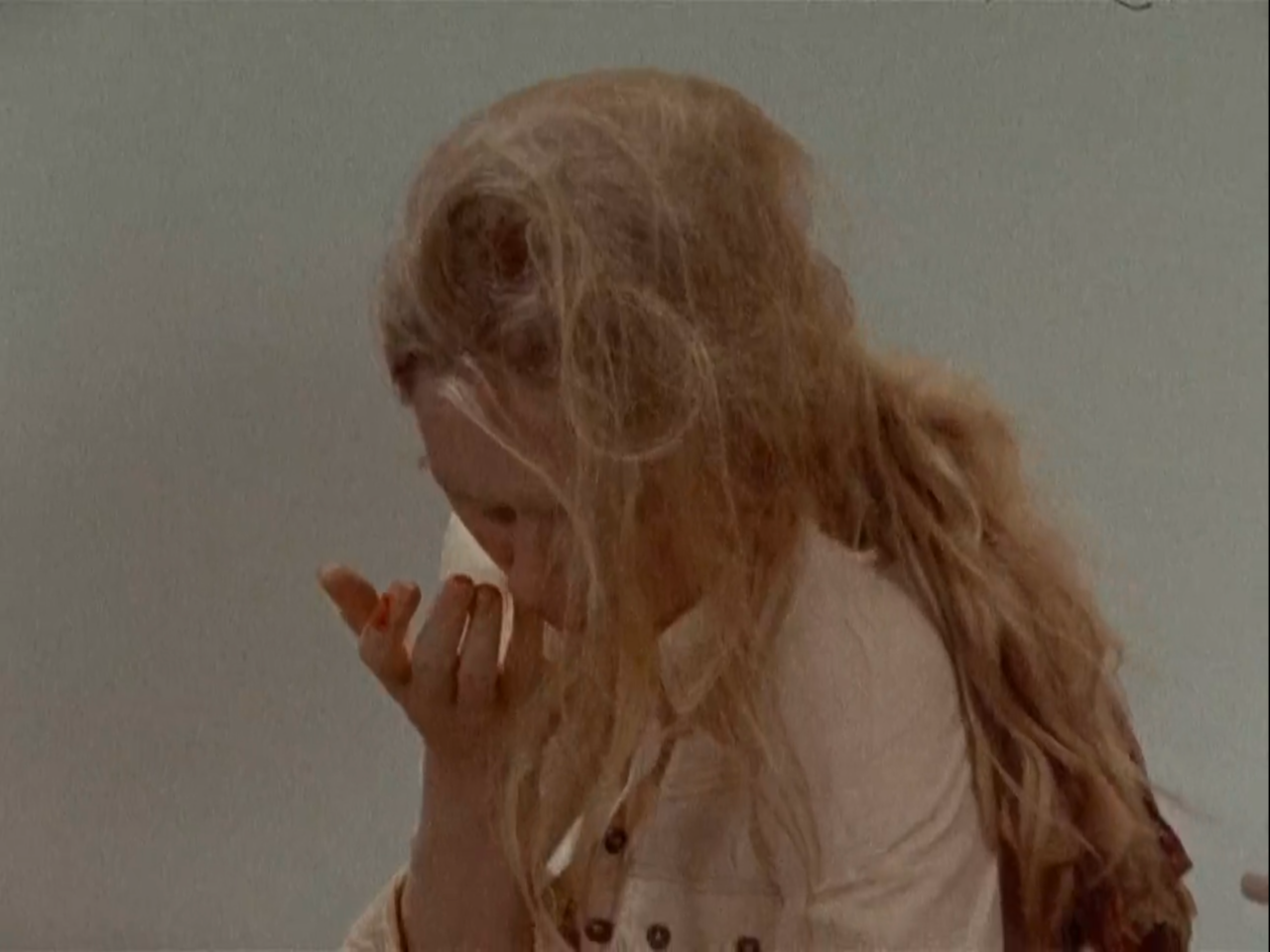
Maybe we’ll know each other as we really are, without these horrible masks is what Marianne says to Johan. She says this before he hits her. It is like watching a little boy trying to destroy his humiliation with his hands. It is disturbing, and pathetic, and sad. And yet it is this flare of violence that marks the end of a childhood between them. They have played pretend long enough. Now they can sign the papers and give up their roles. In the last shot they are revealed in their true proportions: Johann so small, so diminutive; Marianne almost mythic in her fortitude. Blood on her real face. I dare not say that blood is the answer, but I dare say that blood doesn’t dissemble. So much of the human condition is seeking a way out of the misery of being unseen is what Liv Ullmann says to me as I sit writing this, in love and alone in my apartment.

IN the MIDDLE of the NIGHT in a DARK HOUSE SOMEWHERE in the WORLD
In defiance to the modern unilinear view of time — for which the only relation conceivable is that between cause and effect — is the ‘single synchronic act’ of loving. I’m paraphrasing (Berger). Bergman, like Berger, was a lover. Marianne and Johan have come again to the seaside. It is the first anniversary of their affair and the twentieth year of their marriage. There is something blessed about this meeting, but they aren’t floating along in any kind of ether. No. They are on earth. Time has given me a third partner, Marianne says. Experience. Yes. She has attained a burnt innocence, like Ricœur’s second naivete. One loses one’s hands and finds them again. To know that such things are possible, these miracles which come to us like small, frail fruits. What I have always loved most in men is imperfection. O, Liv. She gives us a template for joy with tranquility: the forehead serene, the eyebrows arched, the eyes open and smiling, the corners of the mouth turned up a little, the complexion bright, the cheeks and lips red. Marianne, no longer ashen. In defiance the lovers lie together in the dark house. The hours move like waves.
LIST of SOURCES (in order of appearance):
Sontag, Susan; from “On Style” in Against Interpretation
Barthes, Roland; from A Lover’s Discourse
Weil, Simone; from Gravity and Grace
Ullmann, Liv; from an interview with Elle magazine “Hollywood’s Most Underappreciated Icon Steps Out of the Shadows”
Berger, John; from What Time Is It?
Le Brun, Charles (trans. by John Tinney); Monsieur Le Brun’s Expressions of the Passions of the Soul