


Snow droughts have become longer and more frequent, and snowpack has decreased dramatically since 1970. Canadian cities are losing almost a whole month of winter days. Just a few weeks ago, a winter heat wave in Nunavut shot temperatures above 0°C, thirty degrees above its average daily high of -29°C.
But none of this will stop the movie machine. The Hallmark Channel films over 50% of its movies in Canada; many of them Christmas movies, many of them shot in the middle of summer.
“[Hallmark producers] know that it only needs to be Christmas time inside the frame,” Rankin remarked in an interview with Cineaste, reflecting on his winter filmmaking struggles. “Outside the frame it can be a sweltering summer day in Winnipeg, but inside the frame it’s a snowy day in Christmastown, Vermont.”
"Past and present, the fact of the matter is that faking winter is resource-intensive at best, and downright dangerous at worst."
Here are some of the ways filmmakers are sustaining the illusion of Christmastown. Snow Business Hollywood, the leading special effects company for fake snow, offers 168 products, including snow dressing, fake snow falling (the de facto industry favourite is SnowCel, a paper-based synthetic snow), and, of course, artificial ice and snow created by snow machines.
Cree journalist Michelle Cyca noted that in total, recreational snow machines consume a tremendous amount of power and water, emitting on average 130,095 tons of CO2 in the process, the equivalent of 28,000 cars on the road per year. The demand for these machines is only rising. By 2050, researchers forecast that the global demand for artificial snow will rise by 97%.
The historic alternatives for fake snow aren’t all that much better. Asbestos was pumped into the soundstages of Citizen Kane, The Wizard of Oz, and Bing Crosby’s White Christmas. It’s a Wonderful Life was filmed during the summer, not in New York but in Los Angeles. Producers used a mixture of Foamite, soap, sugar, and water to create its frigid Bedford Falls bridge scene. Past and present, the fact of the matter is that faking winter is resource-intensive at best, and downright dangerous at worst.
---
I grew up in Southwestern Ontario, where an already mild environment, primed for lake effect snow squalls, has given way to grey, slushy winters. Living in Montreal, I often feel like I’m tricking myself. Nine hours away from my home, I can walk in an icy, French colonial city. I don’t have to spend my winters in a light jacket. To keep this illusion up, how far north must I go?
Earlier this winter, I was walking through downtown Montreal and stopped in at the Canada Centre for Architecture on a whim.
It was the first Sunday of the month, which meant that the museum was free. There, I listened to a vinyl recording of Ludwig Berger’s Melting Landscapes, a field recording of the Rhône Glacier disintegrating in real-time.
A dying glacier sounds like you are driving with your window cracked a tiny bit open. It sounds like plastic expanding and water boiling.
"A dying glacier sounds like you are driving with your window cracked a tiny bit open."
“In sound, one can experience the microscopic scale from which the climate catastrophe takes its course,” Berger writes.
Perhaps film has yet to catch up with the acoustic world. Films about climate change elicit critical derision at worst (Don’t Look Up), and discomfort and commercial indifference at best (How to Blow Up a Pipeline). A difficulty of articulating the climate crisis is that what constitutes our most pressing existential threats—extreme heat, rapid environmental change, ocean acidification—often are, for the lack of a better description, boring to look at. As Molly Taft notes, while extreme weather events like wildfires and storms make for good TV, depicting a warming climate through footage of people sweating at the beach or a mid-winter thaw is simply not as interesting.
Susan Sontag famously described photography as “an elegiac, twilight art.” If that is true, then video is voodoo, it is a zombie, it is Lazarus rising from the dead. Video recordings of winter and snow become desperate grasps to revive a world that is changing, a colder world that has already passed us by.
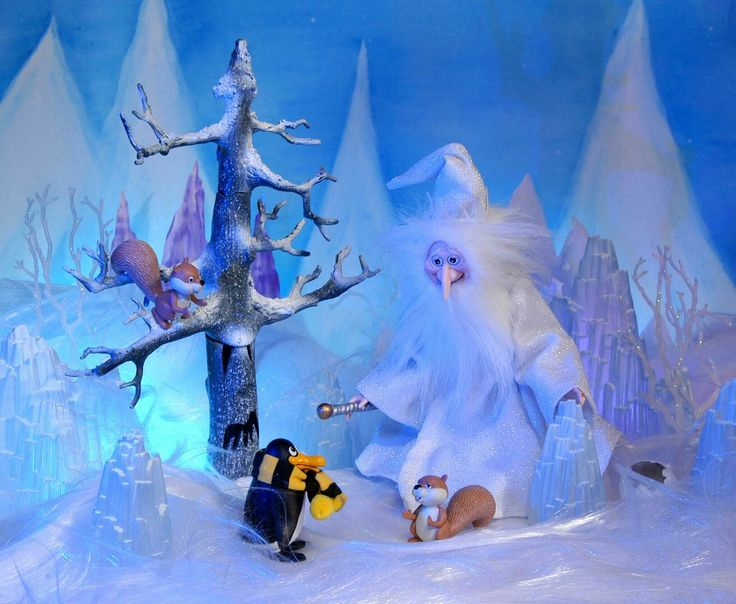
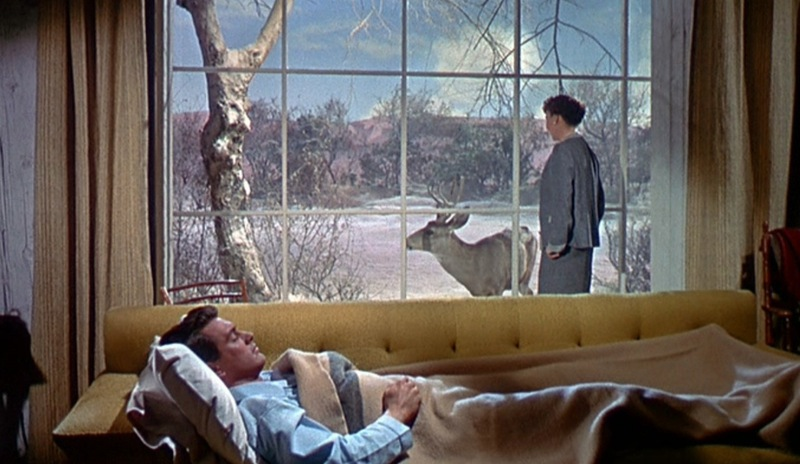
Imbued with nostalgia, snow may act as shorthand for what is lost or what we never had. In Hallmark’s movies, snow grounds its compulsory heterosexual fantasies in an idyllic, distant past. In Severance, snow and vintage cars evoke an uncanny retro-futurist aesthetic to expand the gulf between viewer and on-screen horrors. Snow takes us to the Christmassy world made by Rankin (no relation to Matthew) and Bass’s Rudolph the Red-Nosed Reindeer, a glittering, childish stop-motion paradise of song and dance. It takes us to the technicolour stages of All That Heaven Allows, where blue-tinged, icing sugar snow isolates our lovers from societal judgment.
The insistence on sustaining this illusion of a cold world through snow machines and CGI speaks to a broader cultural urge to simulate a hegemonic reality, no matter the ethical or environmental costs. It might be raining in December, but generative AI can show you what a white Christmas looks like, all the while sucking up water and burning fossil fuels. It’s a natural progression from asbestos snow.
Attitudes towards cold environments are also often informed by the incorrect colonial view that the Arctic is a frozen wasteland, and a warming environment is often spun as a positive, not a negative. Inuk activist Sheila Watt-Cloutier emphasized this need for an intersectional understanding of climate change: “The Inuk hunter falling through the melting ice in the Arctic is connected to actions in the South, to the cars we drive, to the policies we create and the disposable world we have become.”
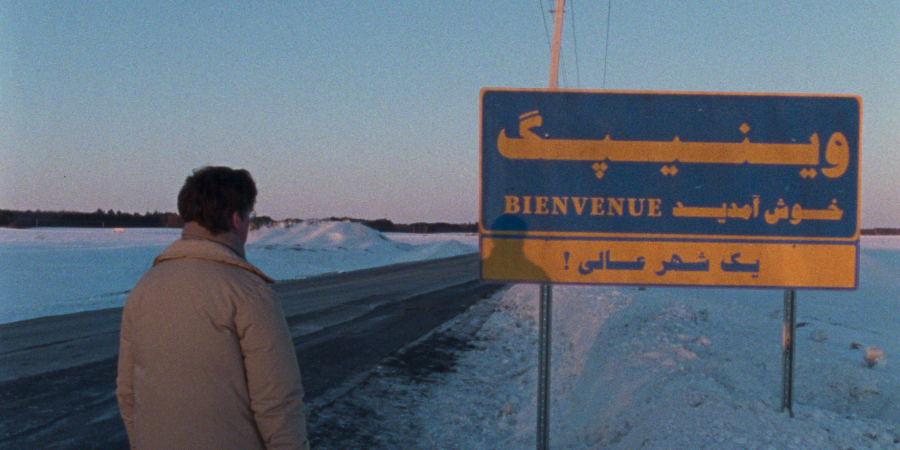
How do we navigate this disposable world? Perhaps snow can contain not just a vision of a lost past, but a material present and a future that is still up for grabs. While Universal Language speaks a similar retro-futurist visual language as Severance, its conclusion is decidedly hopeful. Winter becomes a site of connection, where boundaries between strangers collapse, and interdependence sustains. “Now that you are home, perhaps you can meet someone and settle down,” Massoud (Pirouz Nemati) says to Matthew (Matthew Rankin). “It’s nice to be with loved ones in this cold weather.”
"It might be raining in December, but generative AI can show you what a white Christmas looks like, all the while sucking up water and burning fossil fuels."
Anishinaabeh scholar and artist Leanne Betasamosake Simpson has articulated the fundamental connective properties of snow: sintering. When snow piles up, grains chemically bond to each other, becoming a coherent network. “The first thing [snowflakes] do when they get there is find a way to belong,” Simpson explains. “They soften their edges. They bond in a physical way to their neighbours, in a way that doesn’t destroy their neighbours and in a way that doesn’t destroy themselves.”
Snow is totalizing. It insulates us from urban noise pollution. It isolates us, buries the ugly things we have thrown away, keeps us locked in our rooms for four months. But during the dark of February, snow is what illuminates the long winter nights. When storms shut down major cities, the grinding pace of modern life comes to a halt. My neighbours cross-country ski to the grocery store; grown adults wear goofy, technicolour snowsuits; lumpen children get pulled through busy streets on sleds. Snow reminds us that we are small and fragile in the grand scheme of things. It makes us simple again, reducing us to our basest needs: warmth, shelter, food, companionship.
Time will tell if we choose to save winter, or if we settle for recreating its image. I have two young nieces and a barely one-month-old nephew. Will the only winters we share be the ones we watch on a screen? I hope not. It doesn’t have to be.
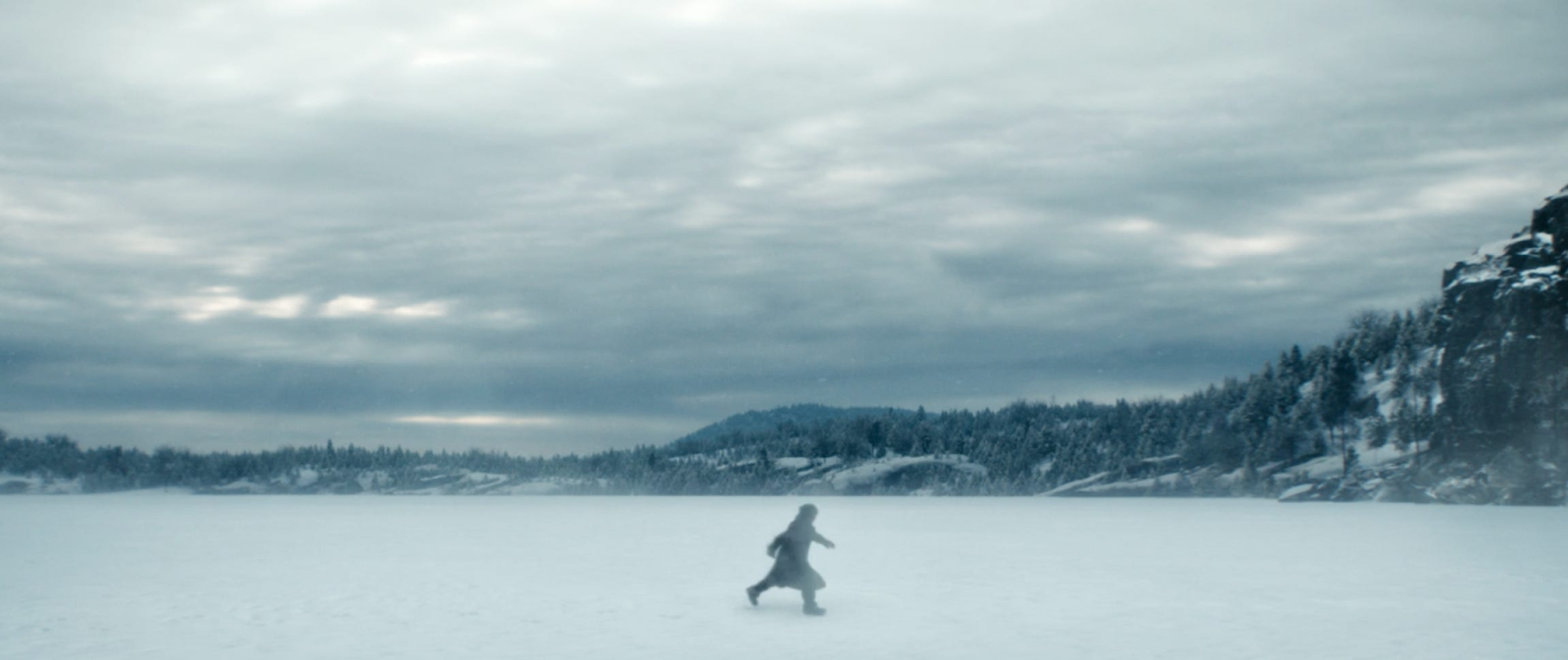
Snow droughts have become longer and more frequent, and snowpack has decreased dramatically since 1970. Canadian cities are losing almost a whole month of winter days. Just a few weeks ago, a winter heat wave in Nunavut shot temperatures above 0°C, thirty degrees above its average daily high of -29°C.
But none of this will stop the movie machine. The Hallmark Channel films over 50% of its movies in Canada; many of them Christmas movies, many of them shot in the middle of summer.
“[Hallmark producers] know that it only needs to be Christmas time inside the frame,” Rankin remarked in an interview with Cineaste, reflecting on his winter filmmaking struggles. “Outside the frame it can be a sweltering summer day in Winnipeg, but inside the frame it’s a snowy day in Christmastown, Vermont.”
"Past and present, the fact of the matter is that faking winter is resource-intensive at best, and downright dangerous at worst."
Here are some of the ways filmmakers are sustaining the illusion of Christmastown. Snow Business Hollywood, the leading special effects company for fake snow, offers 168 products, including snow dressing, fake snow falling (the de facto industry favourite is SnowCel, a paper-based synthetic snow), and, of course, artificial ice and snow created by snow machines.
Cree journalist Michelle Cyca noted that in total, recreational snow machines consume a tremendous amount of power and water, emitting on average 130,095 tons of CO2 in the process, the equivalent of 28,000 cars on the road per year. The demand for these machines is only rising. By 2050, researchers forecast that the global demand for artificial snow will rise by 97%.
The historic alternatives for fake snow aren’t all that much better. Asbestos was pumped into the soundstages of Citizen Kane, The Wizard of Oz, and Bing Crosby’s White Christmas. It’s a Wonderful Life was filmed during the summer, not in New York but in Los Angeles. Producers used a mixture of Foamite, soap, sugar, and water to create its frigid Bedford Falls bridge scene. Past and present, the fact of the matter is that faking winter is resource-intensive at best, and downright dangerous at worst.
---
I grew up in Southwestern Ontario, where an already mild environment, primed for lake effect snow squalls, has given way to grey, slushy winters. Living in Montreal, I often feel like I’m tricking myself. Nine hours away from my home, I can walk in an icy, French colonial city. I don’t have to spend my winters in a light jacket. To keep this illusion up, how far north must I go?
Earlier this winter, I was walking through downtown Montreal and stopped in at the Canada Centre for Architecture on a whim.
It was the first Sunday of the month, which meant that the museum was free. There, I listened to a vinyl recording of Ludwig Berger’s Melting Landscapes, a field recording of the Rhône Glacier disintegrating in real-time.
A dying glacier sounds like you are driving with your window cracked a tiny bit open. It sounds like plastic expanding and water boiling.
"A dying glacier sounds like you are driving with your window cracked a tiny bit open."
“In sound, one can experience the microscopic scale from which the climate catastrophe takes its course,” Berger writes.
Perhaps film has yet to catch up with the acoustic world. Films about climate change elicit critical derision at worst (Don’t Look Up), and discomfort and commercial indifference at best (How to Blow Up a Pipeline). A difficulty of articulating the climate crisis is that what constitutes our most pressing existential threats—extreme heat, rapid environmental change, ocean acidification—often are, for the lack of a better description, boring to look at. As Molly Taft notes, while extreme weather events like wildfires and storms make for good TV, depicting a warming climate through footage of people sweating at the beach or a mid-winter thaw is simply not as interesting.
Susan Sontag famously described photography as “an elegiac, twilight art.” If that is true, then video is voodoo, it is a zombie, it is Lazarus rising from the dead. Video recordings of winter and snow become desperate grasps to revive a world that is changing, a colder world that has already passed us by.
Imbued with nostalgia, snow may act as shorthand for what is lost or what we never had. In Hallmark’s movies, snow grounds its compulsory heterosexual fantasies in an idyllic, distant past. In Severance, snow and vintage cars evoke an uncanny retro-futurist aesthetic to expand the gulf between viewer and on-screen horrors. Snow takes us to the Christmassy world made by Rankin (no relation to Matthew) and Bass’s Rudolph the Red-Nosed Reindeer, a glittering, childish stop-motion paradise of song and dance. It takes us to the technicolour stages of All That Heaven Allows, where blue-tinged, icing sugar snow isolates our lovers from societal judgment.
The insistence on sustaining this illusion of a cold world through snow machines and CGI speaks to a broader cultural urge to simulate a hegemonic reality, no matter the ethical or environmental costs. It might be raining in December, but generative AI can show you what a white Christmas looks like, all the while sucking up water and burning fossil fuels. It’s a natural progression from asbestos snow.
Attitudes towards cold environments are also often informed by the incorrect colonial view that the Arctic is a frozen wasteland, and a warming environment is often spun as a positive, not a negative. Inuk activist Sheila Watt-Cloutier emphasized this need for an intersectional understanding of climate change: “The Inuk hunter falling through the melting ice in the Arctic is connected to actions in the South, to the cars we drive, to the policies we create and the disposable world we have become.”
How do we navigate this disposable world? Perhaps snow can contain not just a vision of a lost past, but a material present and a future that is still up for grabs. While Universal Language speaks a similar retro-futurist visual language as Severance, its conclusion is decidedly hopeful. Winter becomes a site of connection, where boundaries between strangers collapse, and interdependence sustains. “Now that you are home, perhaps you can meet someone and settle down,” Massoud (Pirouz Nemati) says to Matthew (Matthew Rankin). “It’s nice to be with loved ones in this cold weather.”
"It might be raining in December, but generative AI can show you what a white Christmas looks like, all the while sucking up water and burning fossil fuels."
Anishinaabeh scholar and artist Leanne Betasamosake Simpson has articulated the fundamental connective properties of snow: sintering. When snow piles up, grains chemically bond to each other, becoming a coherent network. “The first thing [snowflakes] do when they get there is find a way to belong,” Simpson explains. “They soften their edges. They bond in a physical way to their neighbours, in a way that doesn’t destroy their neighbours and in a way that doesn’t destroy themselves.”
Snow is totalizing. It insulates us from urban noise pollution. It isolates us, buries the ugly things we have thrown away, keeps us locked in our rooms for four months. But during the dark of February, snow is what illuminates the long winter nights. When storms shut down major cities, the grinding pace of modern life comes to a halt. My neighbours cross-country ski to the grocery store; grown adults wear goofy, technicolour snowsuits; lumpen children get pulled through busy streets on sleds. Snow reminds us that we are small and fragile in the grand scheme of things. It makes us simple again, reducing us to our basest needs: warmth, shelter, food, companionship.
Time will tell if we choose to save winter, or if we settle for recreating its image. I have two young nieces and a barely one-month-old nephew. Will the only winters we share be the ones we watch on a screen? I hope not. It doesn’t have to be.